

Why API Logs Matter? 🧐
API logs offer visibility into the operation of your application. By analyzing API logs, you can:- Identify and diagnose issues.
- Monitor API health and performance.
- Track user activity and patterns.
- Ensure security by detecting malicious activities.
Reading the Logs 📖
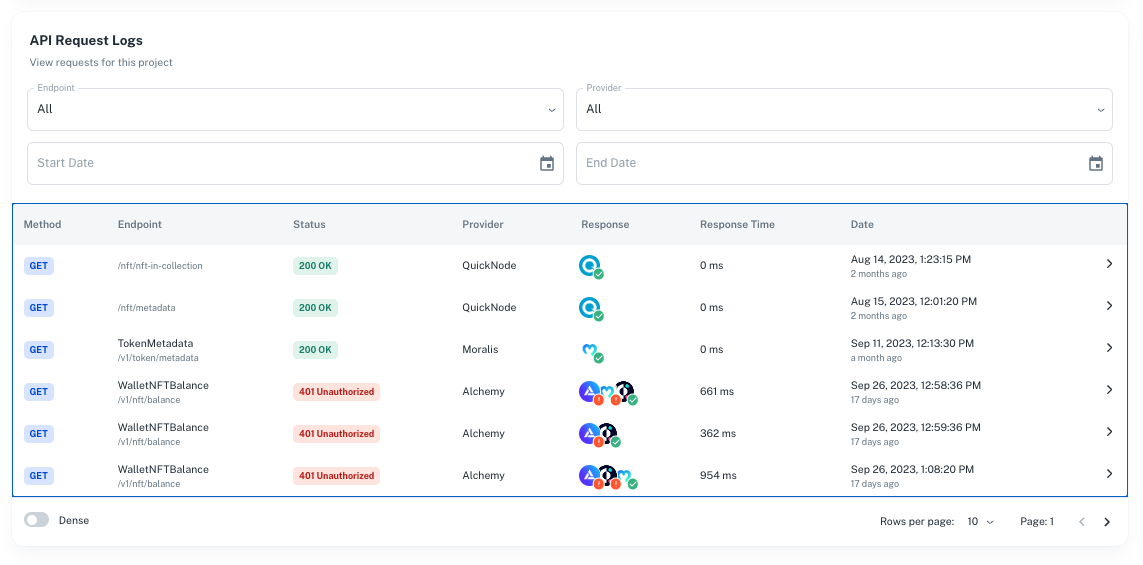
- Method: the http request method, such as
GETorPOST. - Endpoint: Which API endpoint was accessed.
- Status: Success or error status code.
- Provider: The provider that provided the final response.
- Response: The provider(s) responses that attempted the API call.
- Response Time: How long the API took to respond, also as known as latency.
- Date: The date and time when the request was made.
Detailed API Request Logs 📝
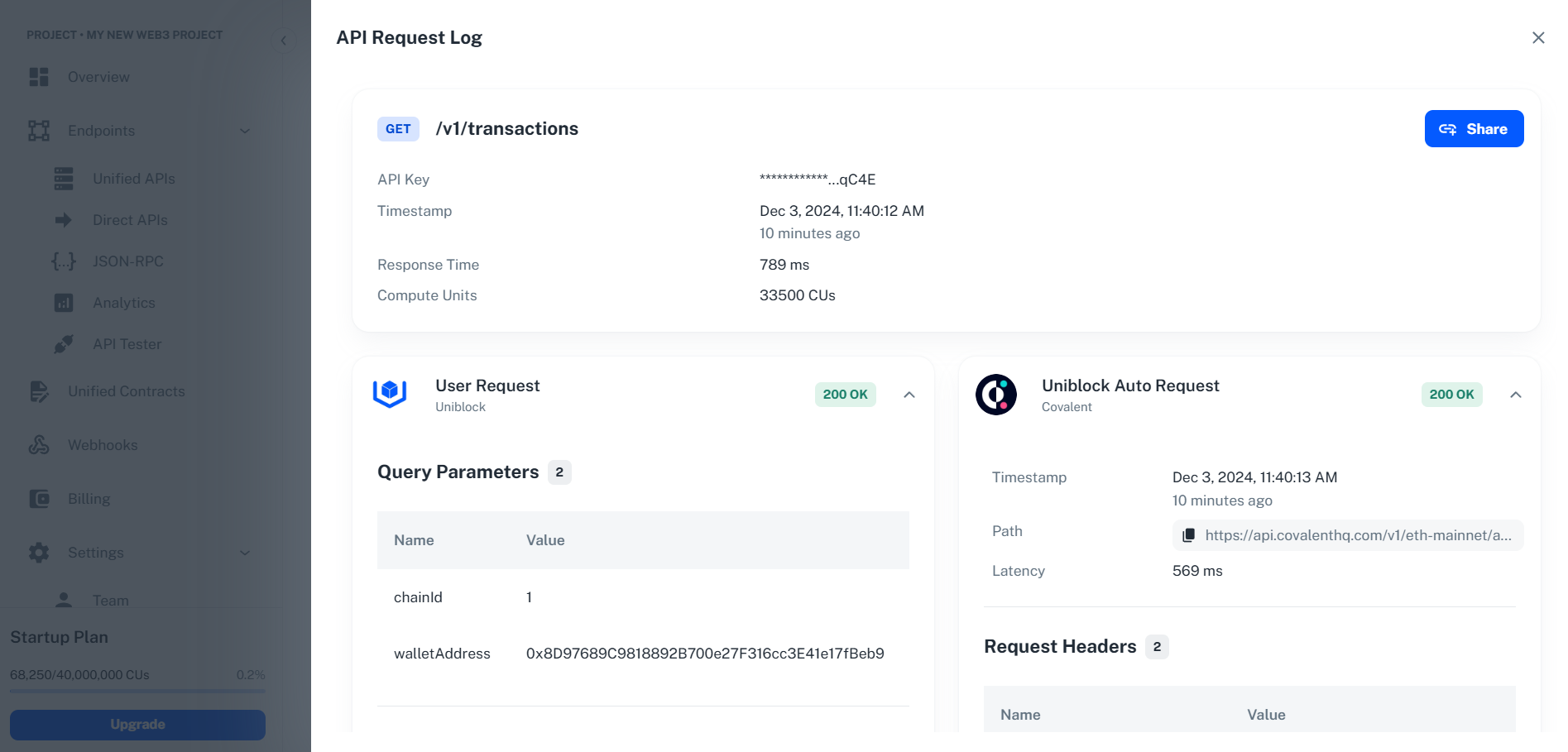
-
HTTP Method: Such as
GET, indicating the type of request made. -
Endpoint Name: A brief descriptor like
TokenMetadataoffering context on the purpose of the request. -
Endpoint Path: The specific path like
/v1/token/metadataaccessed on our servers. - Timestamp: The exact time when the request was made.
- Response Time: Duration taken by our server to process and respond to the request.
-
Headers: These are meta-data associated with the request. It includes various fields like:
Host: The domain making the request.User-Agent: Information about the client system and browser.Accept: The type of content expected in response.- … and many others.
- Query Parameters: These are additional data sent with the request to provide context or specify a certain behavior.
-
Request Body: The actual data sent in a
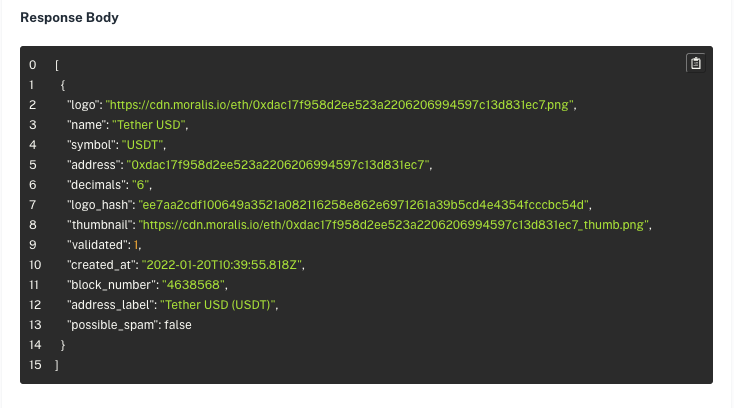
POSTorPUTrequest. - Response Headers & Body: Meta-data and actual data returned from our provider(s) in response to the request. There may be multiple in the case that priority list gets engaged.
Filtering and Searching 🔍
Use the filter options to narrow down logs based on specific criteria, such as providers, status codes, endpoints, or time frames. The search bar allows you to quickly find logs containing specific keywords or error messages.Ready to get started with Uniblock?
Create your free account and start building with unified blockchain infrastructure across 100+ chains.
View API reference
Explore all available endpoints and interactive playgrounds
Join our community
Get help from our team and connect with other developers